How do we build truly “democratic” AI for Africa ? — My thoughts
Reflections from Norrsken Africa/Week 2025
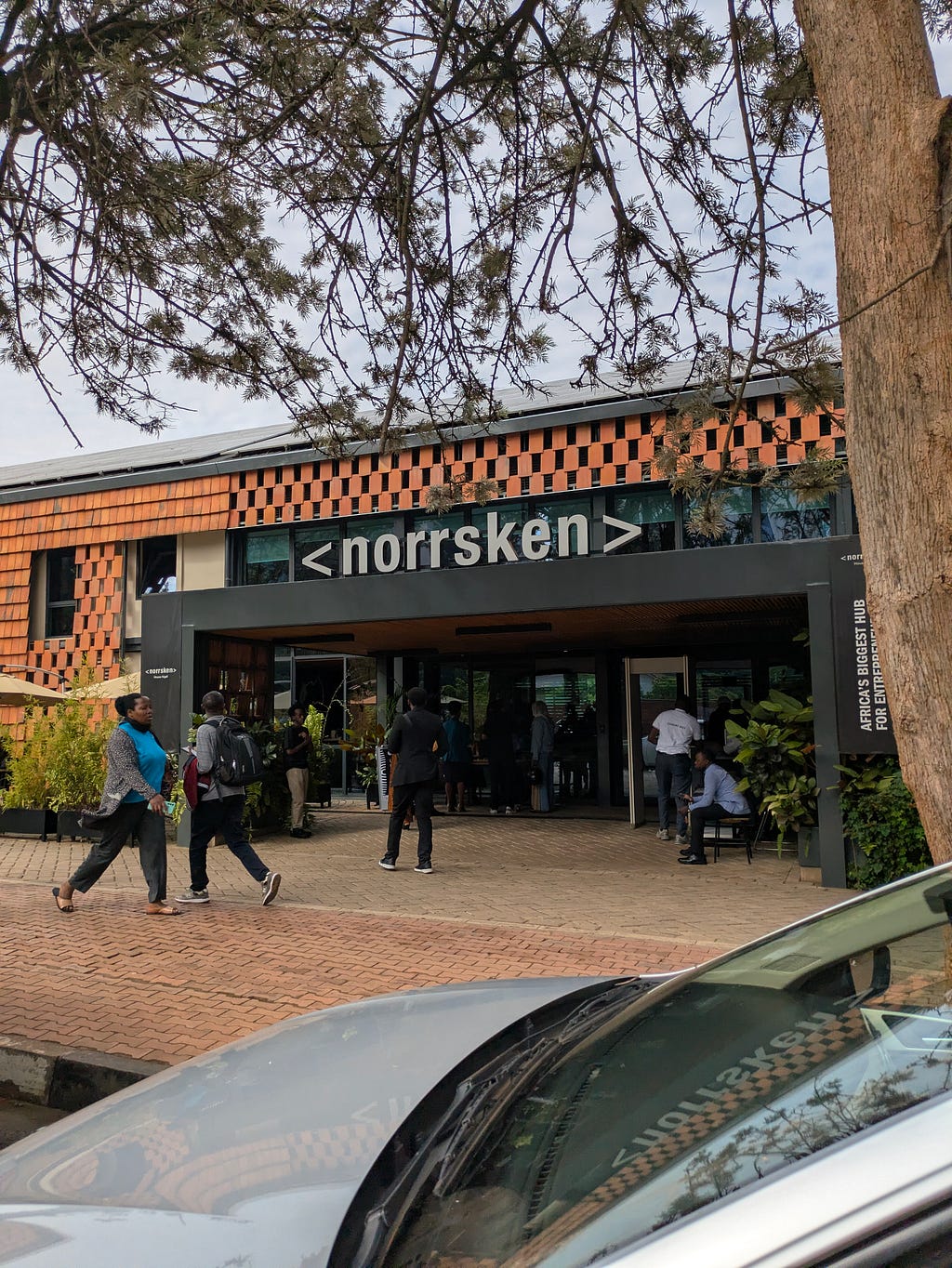
From November 20th-21st 2025; I was attending the Norrsken Africa/Week in Kigali at the Norrsken House. I met, spoke to and listened to brilliant minds; great founders with powerful insights, perspectives and histories that have endured a lot of hardship so they can build solutions to not only African but global problems too.
The event brought together over 1,200 community members, partners, speakers, and attendees — a testament to the growing momentum of Africa’s innovation ecosystem. What struck me most wasn’t just the scale of the gathering, but the depth of the conversations happening in the corridors, panel discussions, and spontaneous encounters throughout Norrsken House Kigali.
Common Sentiments: Data Sovereignty, Talent, and Opportunity as Infrastructure
Some of the commonest sentiments I have heard and resonated with me is data sovereignty, building talent as an infrastructure but also providing avenues/opportunities for this talent to be able to shine and play a pivotal part in building and contributing to the AI revolution for Africa.
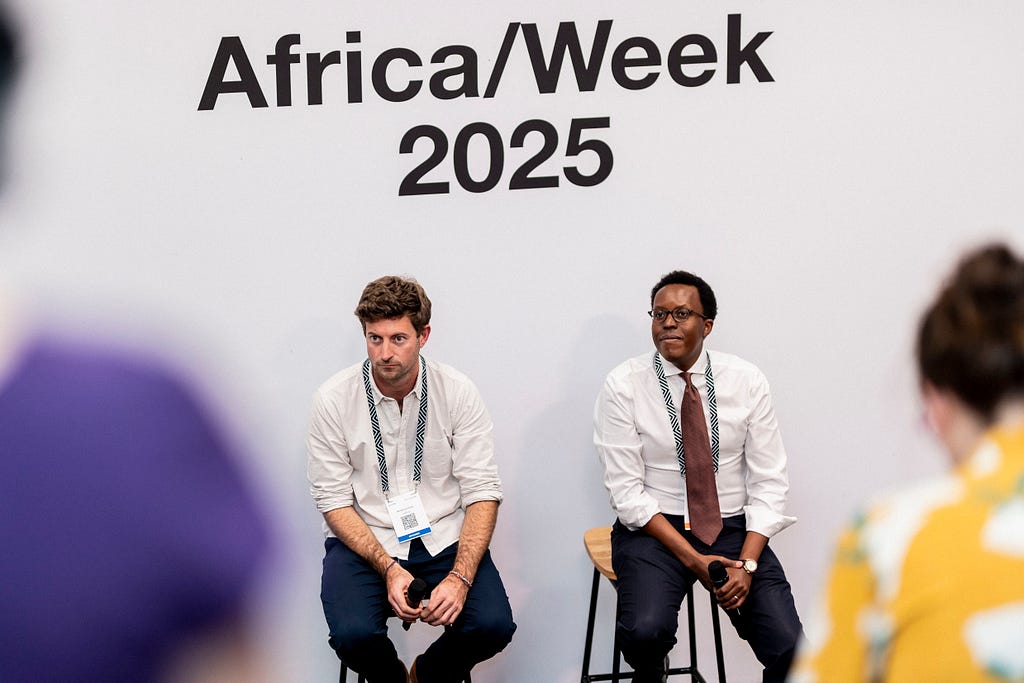
This I gleaned from the session moderated by Mathieu AGUESSE, Co-CEO, Schoolab and one of the panellists Muchiru Mark Kuria; Principal at Gaia Impact was speaking on Corporate Capital & African Innovation: Funding the Next Decade; and while he did he hinted on how he has been and is actively thinking about building Data centres for Africa that are powered and run by renewable energy sources like geothermal, solar, among others and this piqued my interest because this is something most of my colleagues and friends hear me “lecture/rant” on or about. I am big on Africa owning it’s data and having the rights to control how that data is handled; now more than ever it’s important with the AI age/revolution on it’s cusp.
These themes weren’t abstract talking points — they are urgent questions we need to ask ourselves as founders, investors, ecosystem enablers, governments and well-wishers.
Cassava Technologies: A Case Study
One of the companies that is championing data sovereignty in Africa is Cassava Technologies. They provide internet infrastructure in through one of their subsidiary companies Liquid Intelligent Technologies
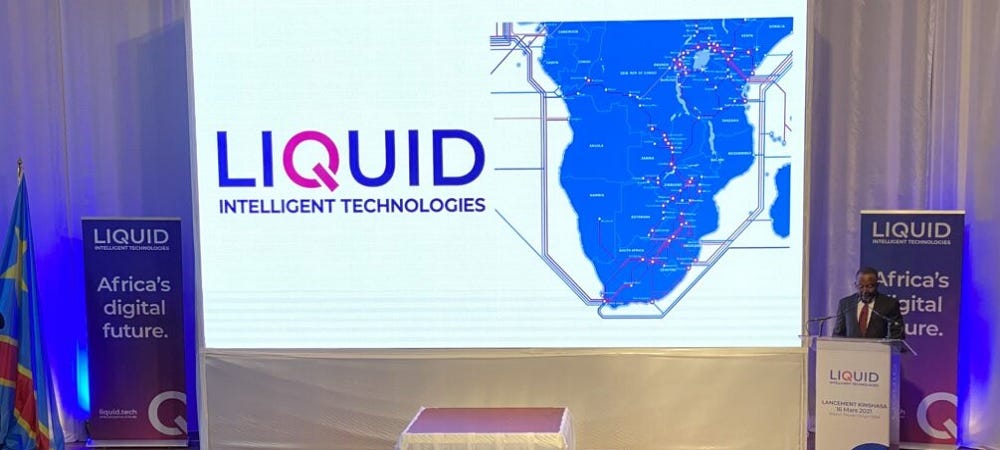
which offers a range of services as listed here:-
- Extensive Fibre Network: The company has laid over 110,000 km of fibre optic cable, creating Africa’s largest independent fibre network, including a link stretching from Cape Town to Cairo.
- Cloud Services: Liquid partners with global leaders like Microsoft and Google Cloud to offer cloud solutions, including deploying Azure Stack in countries such as Uganda, Kenya, Zambia, and Tanzania to meet local data regulatory requirements and reduce latency.
- Data Centres: They operate a network of interconnected, carrier, and cloud-neutral data centres in major cities like Johannesburg, Cape Town, Nairobi, Harare, and Kigali.
- Cyber Security: The company provides a range of cyber security solutions and has launched AI-powered programs and a Cyber Security Business Unit.
- Connectivity Expansion: Liquid is actively working on new fibre routes and leveraging subsea cables to enhance high-speed connectivity across the continent, including previously underserved areas.
- Digital Transformation Partnerships: They collaborate with governments and local businesses to drive digital transformation, such as providing digital computer centres in South Africa and enabling remote monitoring and data analytics for the mining industry in Botswana.
I have interfaced with their services in Uganda, Rwanda, South Sudan and Kenya but their influence and network spans across 18 African countries; from the cape to the heart of Africa in Cairo. This is by far the largest provider of Internet Infrastructure for Corporate use cases.
They (Cassava Technologies) have another company that is called Cassava AI and this is aimed at providing GenAI for every Telecommunications, Financial Services, Universities and Higher Education Institutions, Mining, Governments, Hospitality and Tourism, Agriculture and Manufacturing.
Cassava has partnered with Accenture and NVIDIA to deliver sovereign AI solutions, ensuring that African data stays within the continent and complies with local regulations. They’ve launched CAIMEx, Africa’s first AI Multi-Model Exchange, making advanced AI models accessible to mobile network operators across Africa. Their infrastructure spans over 110,000km of fibre network and multiple data centers across the continent.
On paper, this sounds transformative but what is the common man on the ground benefiting from this? How does the regular African tap into this and benefit from it?
Are the masses in the room?
Providing AI for these sectors is great however what is the pathway to providing the same services to entrepreneurs or the general masses? Cassava AI’s route seems more enterprise and corporate than it is general or consumer targeted. This is something I believe needs to change.
While Cassava Technologies builds the highways of African AI infrastructure, most entrepreneurs and everyday users are still searching for the on-ramp. The enterprise focus makes business sense — these are the clients with resources to pay for GPU computing power, data centers, and AI integration services. But this approach risks creating a two-tier system where AI remains a tool of large institutions rather than a force available for everyone. AI like Internet has become or is about to become a necessity and need; we can’t afford as a continent to discriminate or alienate the masses from accessing it.
The Big Question: How Do We Democratize AI?
I have had questions on what is the right way to democratize (make AI in general — not only generative) accessible to and usable by the general masses that aren’t technical gurus/experts. What does this mean in terms of choosing the medium of communication? What even is democratization in this context?
This question becomes even more complex when we consider Africa’s linguistic landscape.
Majority of African languages are oral and not necessarily written down on tablets or as text. So how do we build for such a community, for such a people?
This isn’t just a technical challenge; it’s a fundamental question about what “AI accessibility” means. An English-language chatbot interface means nothing to a Kenyan farmer who speaks Kikuyu, a Ghanaian trader who conducts business in Twi, or a Rwandan entrepreneur whose first language is Kinyarwanda.
African languages account for at least one third of spoken languages worldwide, yet only a handful of products that offer AI to individuals support these languages — despite the fact that the majority of these languages exist in oral forms rather than in written text.
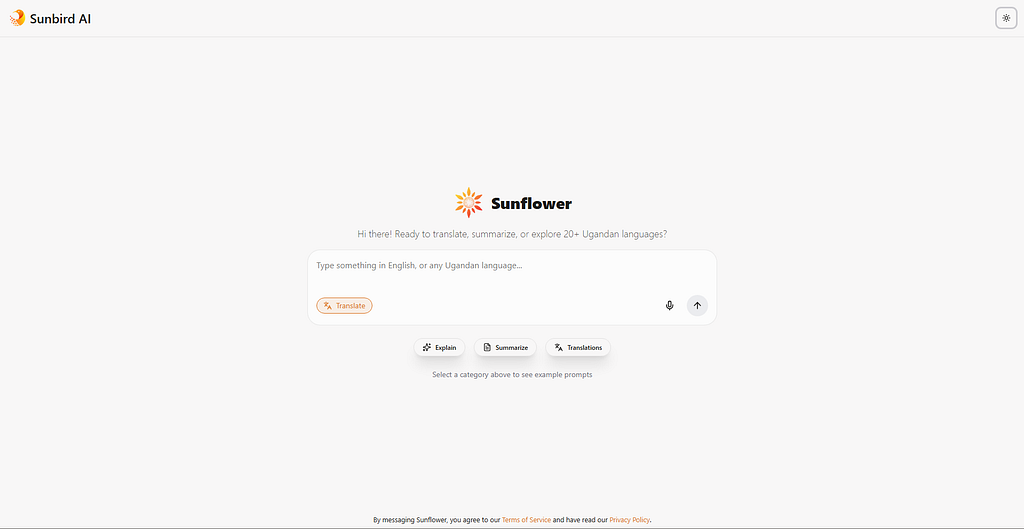
One of the heavy weights I know of that currently does this is recently launched Sunflower Web app from Sunbird AI. The bar to be met is high and they are not yet there in terms of experience but it’s an effort worth noting given that they are a Non-profit and Sunflower is provided free of charge to use.
Of course there are other builders on the continent that I haven’t laboured to mention in this article for fear of making it very lengthy, but atleast we have vanguards in every corner of the continent building towards this African first AI. How they arrive at it and approach the problem might be different but I am rooting for all of them.
The Infrastructure We Need
I think if we got the the answers to these questions it’s the beginning of having a wonderful understanding of how to approach AI as the African continent but also how to build infrastructure and systems that support entrepreneurs building AI and building with AI.
The infrastructure gap isn’t just about fibre optic cables and data centres — though those matter immensely. We need:
- Voice-First AI Systems: Since many African languages are primarily oral, voice should be the primary interface, not text. This requires massive investments in speech recognition and synthesis for hundreds of languages.
- Accessible Compute Resources: GPU-as-a-Service is excellent, but pricing models need to accommodate entrepreneurs working on shoestring budgets, not just corporations with IT departments. This also boils down to charging entrepreneurs in local currency not USD/GBP.
- Localized Training Data: AI models need to be trained on African contexts, idioms, and use cases — not retrofitted from Western datasets. There’s a vast trove of information on African folklore that is stored up in elder’s minds that has yet to be digitized and electronically stored. Telecoms in Africa have access to an immense dataset of caller data which with the right compensation and appropriate data handling procedures could be turned into invaluable datasets to train AI that’s Africa first and for good. Consumer data is not just for Quality Assessment or Surveillance by the state and government as seen in Kenya and Uganda
- Developer Education and Support: Infrastructure means nothing without the human capacity to build on it. We need widespread AI literacy programs. This is to enable and build AI talent as an infrastructure for the continent’s use and for global use too. United States is currently leading in this regard with China and India closely following and I am certain we can join the race too if this is done early enough.
No African country is to be found anywhere on the worlds top 10 AI nations; nor on the global AI power rankings this should be a wakeup call for all our decision makers and folks with power.
Mozilla Common Voice: A Blueprint for Collaboration
Mozilla Common Voice provides a platform for individuals to be able to contribute to an opensource voice dataset of almost all African languages but it’s adoption isn’t widely spread; this is another avenue or initiative we can use to index, record and catalogue African voice data which can be accessed and used later on in subsequent waves of revolution(s).
Since 2019, Mozilla has been working with partners to promote the creation and use of open voice data in East African languages like Kinyarwanda, Kiswahili, and Luganda. The platform has grown to include 100 languages, with significant African representation. The Luganda dataset is one of the datasets I contributed to and you too can become a voice of change (literally use your voice) here . You can speak, listen to correct or write.
But here’s the challenge: despite its potential, adoption remains limited. Why? Awareness is low, contribution requires internet access and devices that many don’t have, and the value proposition for individual contributors isn’t always clear. There’s a saying in Kampala “Nfunilamu wa?” loosely translated to “Where or how do I benefit from this?”
Yet this model — community-driven, open-source, focused on linguistic diversity — represents exactly the kind of infrastructure Africa needs. Imagine if contributing to voice datasets became as common as posting statuses on whatsapp or making a tweet or contributing to Wikipedia, with clear pathways from data collection to useful applications that serve contributors’ communities.
What can you do?
The gap between enterprise AI and democratized AI isn’t inevitable. Bridging it requires intentional design:
For Companies Like Cassava: Consider tiered pricing models, startup incubation programs, and partnerships with educational institutions. Make GPUaaS accessible not just to telecommunications giants but to the developer building a healthcare chatbot in a Nairobi co-working space.
For Policymakers: Invest in digital literacy programs that specifically address AI. Create grants and subsidies that enable small-scale entrepreneurs to access AI infrastructure. Support open-source voice dataset initiatives. Support and create policies that invite investment to the continent and do the basic stuff that won’t scare them away.
For Developers and Entrepreneurs: Contribute to projects like Mozilla Common Voice. Build applications that demonstrate AI’s value in local languages for local problems. Share knowledge and mentor others.
For Investors: Look beyond enterprise-scale solutions. Fund entrepreneurs working on consumer-facing AI applications, especially those addressing the needs of underserved communities. It’s not my place to say this but I will regardless. You need to grow a large risk appetite and have deep seated belief as deep as your doubt for the continent is; to fund entrepreneurs building crazy stuff on the continent; especially if it’s infrastructure or rails level and there’s no clear path to exit for your investment.
Bottomline: Africa’s AI Future Must Be Inclusive
The conversations at Norrsken Africa/Week made one thing abundantly clear: Africa is not content to be merely a consumer of AI technology. The opportunity I had to see real African movers and shakers made me understand the importance of African ownership in designing systems to fund African innovation, from basic sectors to emerging technologies like AI.
But ownership isn’t just about corporate control or data sovereignty — crucial as those are. True ownership means ensuring that every African entrepreneur, every developer, every innovator has the tools, infrastructure, and opportunity to participate in building Africa’s AI future.
The infrastructure being built by companies like Cassava Technologies is essential. But it’s only the foundation. We must build the bridges, the pathways, the on-ramps that connect this infrastructure to the millions of Africans whose problems AI could help solve, whose languages deserve to be spoken by machines, whose innovations could reshape not just Africa but the world.
The AI revolution shouldn’t have a VIP section. If we’re building for Africa, we must build for all of Africa.
What are your thoughts on democratizing AI in Africa? How can we ensure that AI infrastructure serves not just enterprises but everyday users and entrepreneurs? Comment to get the conversation started or reach out to me on Linkedin.